Injection of chemicals directly into the sapstream of trees has been used for over three decades. Various techniques have been used with varying degrees of success. The methods have been used for treating insect pests, fungal and bacterial diseases and for nutritional supplementation.
ACECAPS AND MEDICAPS. We do not recommend this method of treatment in any circumstance. It involves drilling multiple 3/8 or 1/2 inch holes, leaving caps in place, for a product that has a very short residual and limited proven effectiveness.
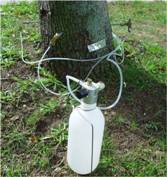
MACROINFUSION. This technique involves infusing relatively large amounts of fluid containing the active ingredients diluted with water in most instances(as much as 50 gallons in very large trees).
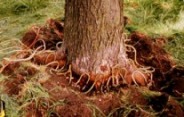
Holes are drilled through the bark and into the xylem (active sapwood) at multiple points around the base of the tree, often into the root flares at and below ground level. Infusion tubing is attached and the fluid is infused, in amounts up to several gallons. The fluid gradually moves upward and diffuses outward to saturate many of the active tissues with beneficial chemicals. This method is very effective for Dutch Elm Disease prevention, using Arbotect, a fungicide. It has been used to control other fungal diseases, such as anthracnose and oak wilt and for nutritional deficiency such as iron deficiency chlorosis and manganese deficiency chlorosis.
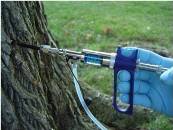
MICRO-INJECTION. This technique uses holes punched through the bark, often somewhat higher on the tree and much less chemical. At each injection point, from 1 to 2 milliliters of concentrated active ingredient is injected just under the bark. We have tried this technique and have been unhappy with the results and dismayed by the technical problems we have encountered. In some instances, we have observed bark separation and injury to the cambium (growth) layer under the bark. In addition, the tissue levels of active ingredients is much lower, resulting in poor actual results (poor or no control of the target insect or disease). Confirmation of this unfortunate fact is found in the multistate monograph, see pages 14 to 16, (where Imicide and Pointer showed continued decline of trees treated even every year) at: http://emeraldashborer.info/files/Multistate_EAB_Insecticide_Fact_Sheet.pdf
|